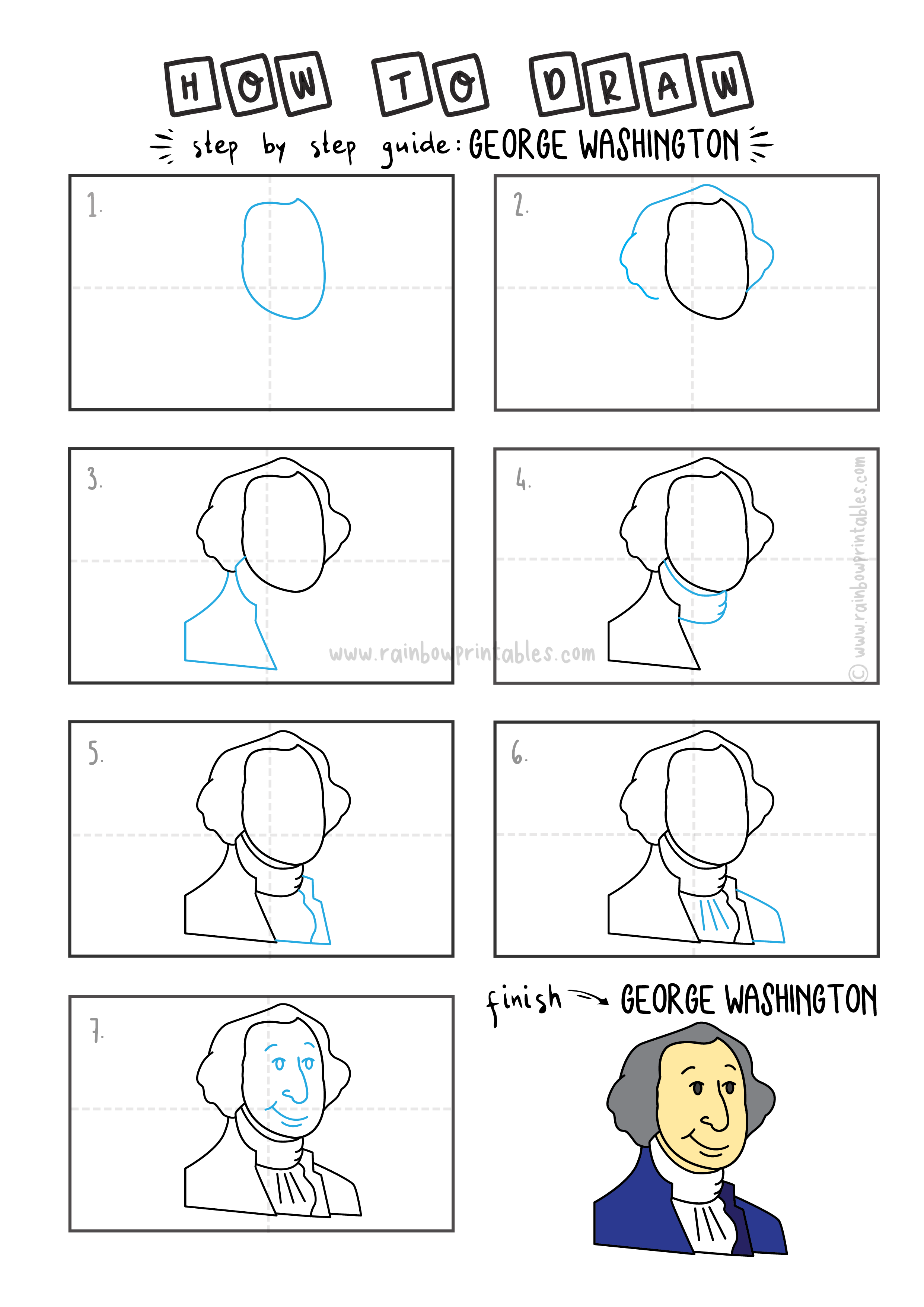
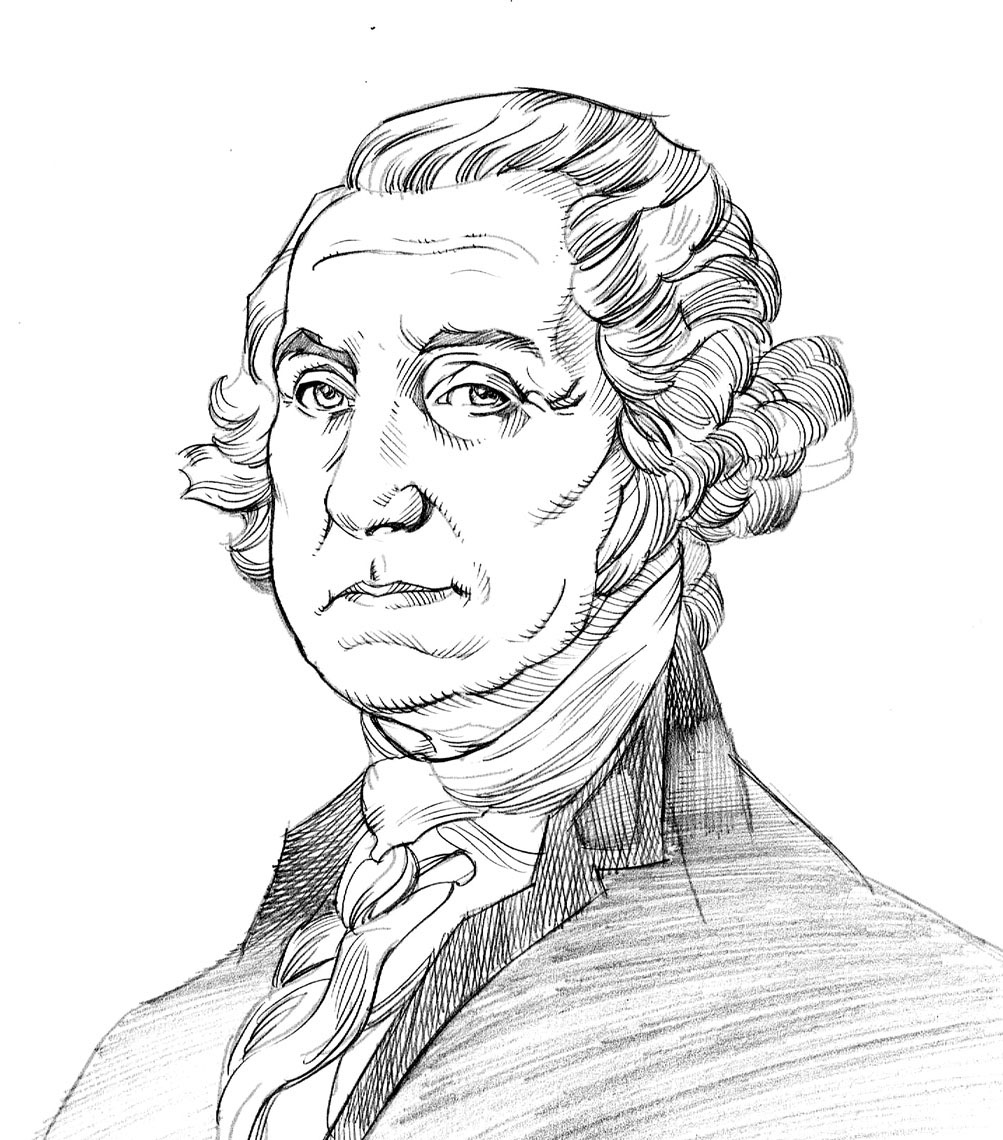
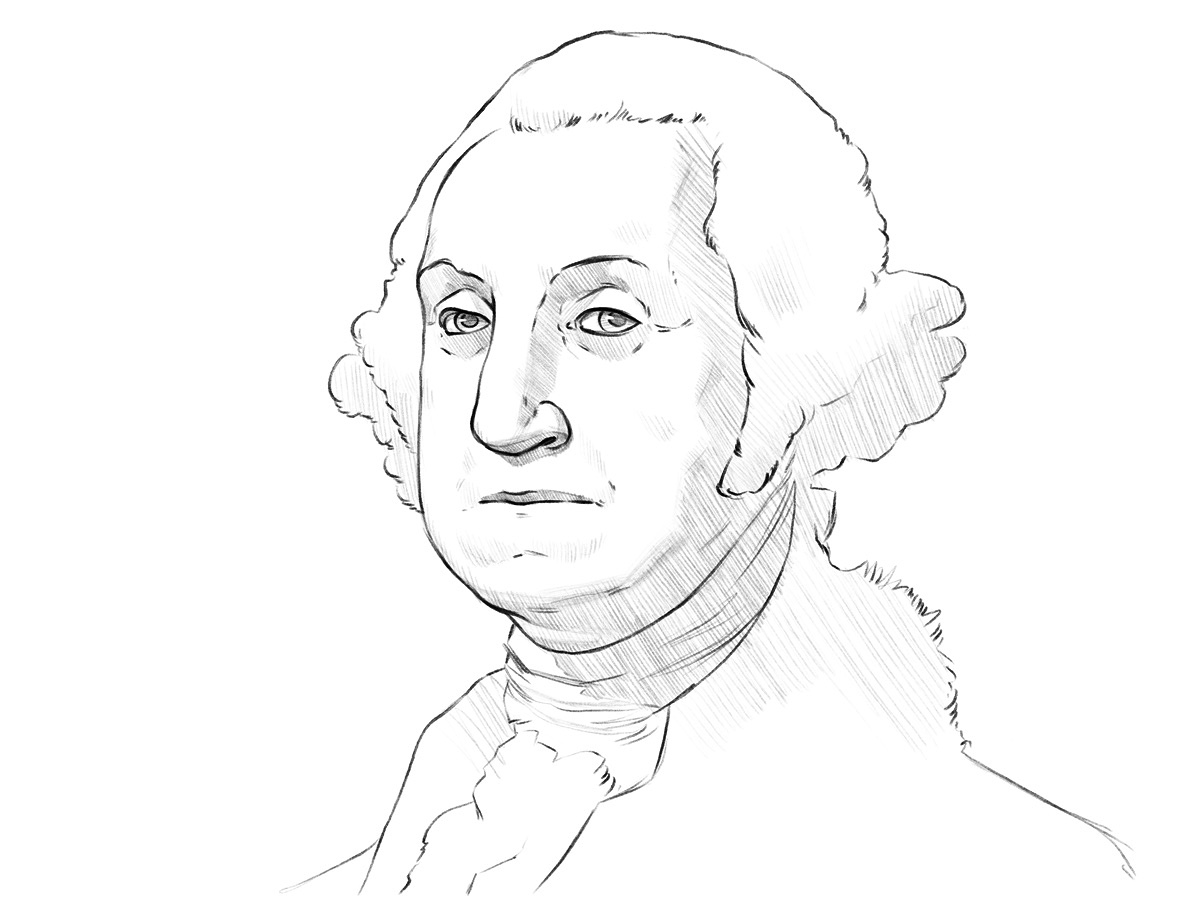
This george washington drawing is a handy reference for anyone needing a clear image for a history project or a quiet afternoon activity. It works well as a simple outline for younger artists or a base for a more detailed sketch. If you are looking for different ways to combine visual art with writing, check out Where Can I Find a Drawing a Poem Reference? for some creative ideas.
The printable is easy to download and print right at home. It is useful for creating a straightforward line art project or even a colorful portrait.

Read also:
Studying Famous Paintings of George Washington
When looking at a reference image, it helps to understand the history behind the pose. Many outlines are based on famous george washington paintings created during his lifetime, such as the Athenaeum Portrait which appears on the one-dollar bill. These historical sources usually show the founding father in a formal pose, facing slightly to one side. A drawing based on these works often focuses on the head and shoulders, making it a manageable subject for a single sheet of paper.
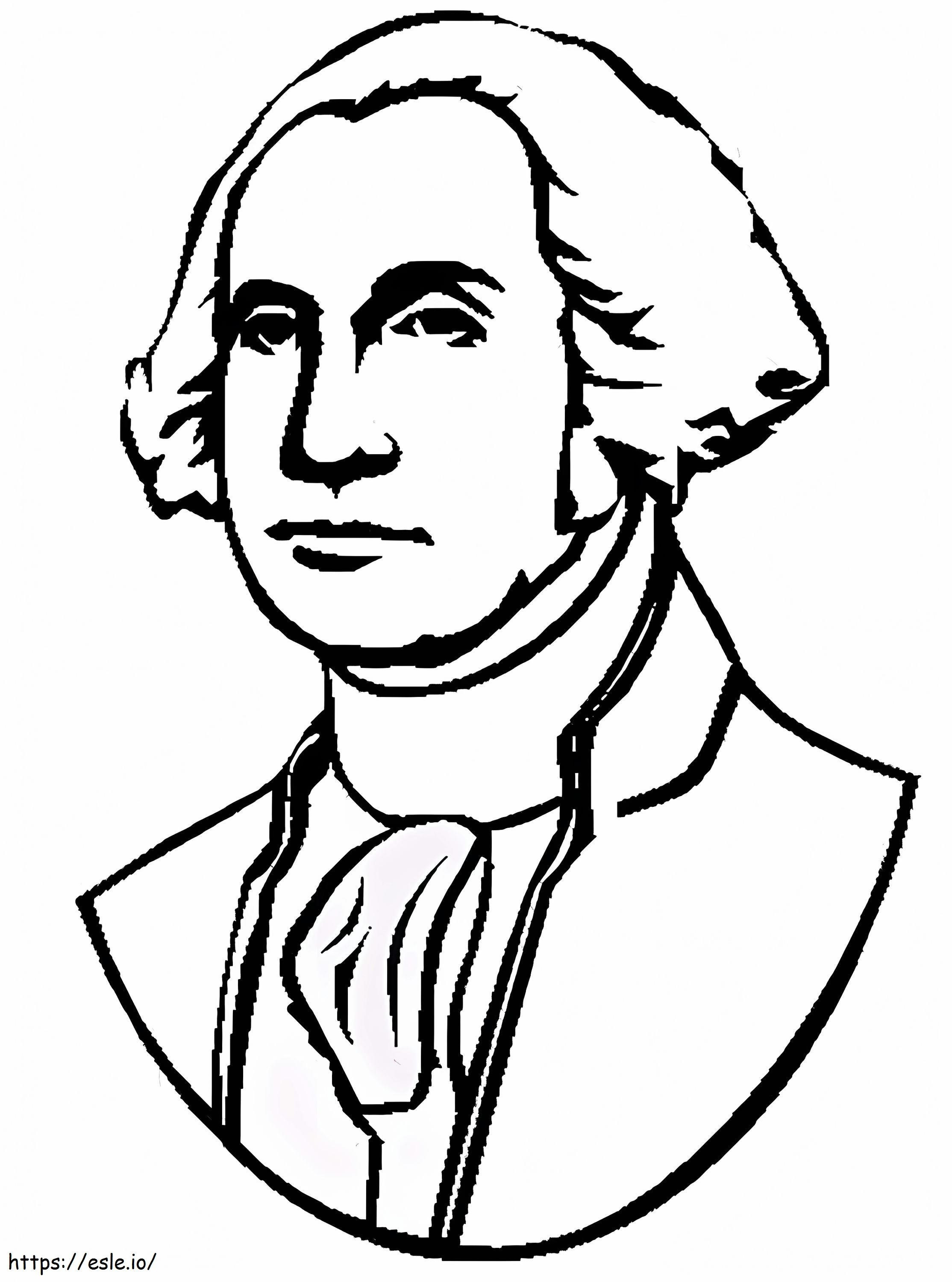
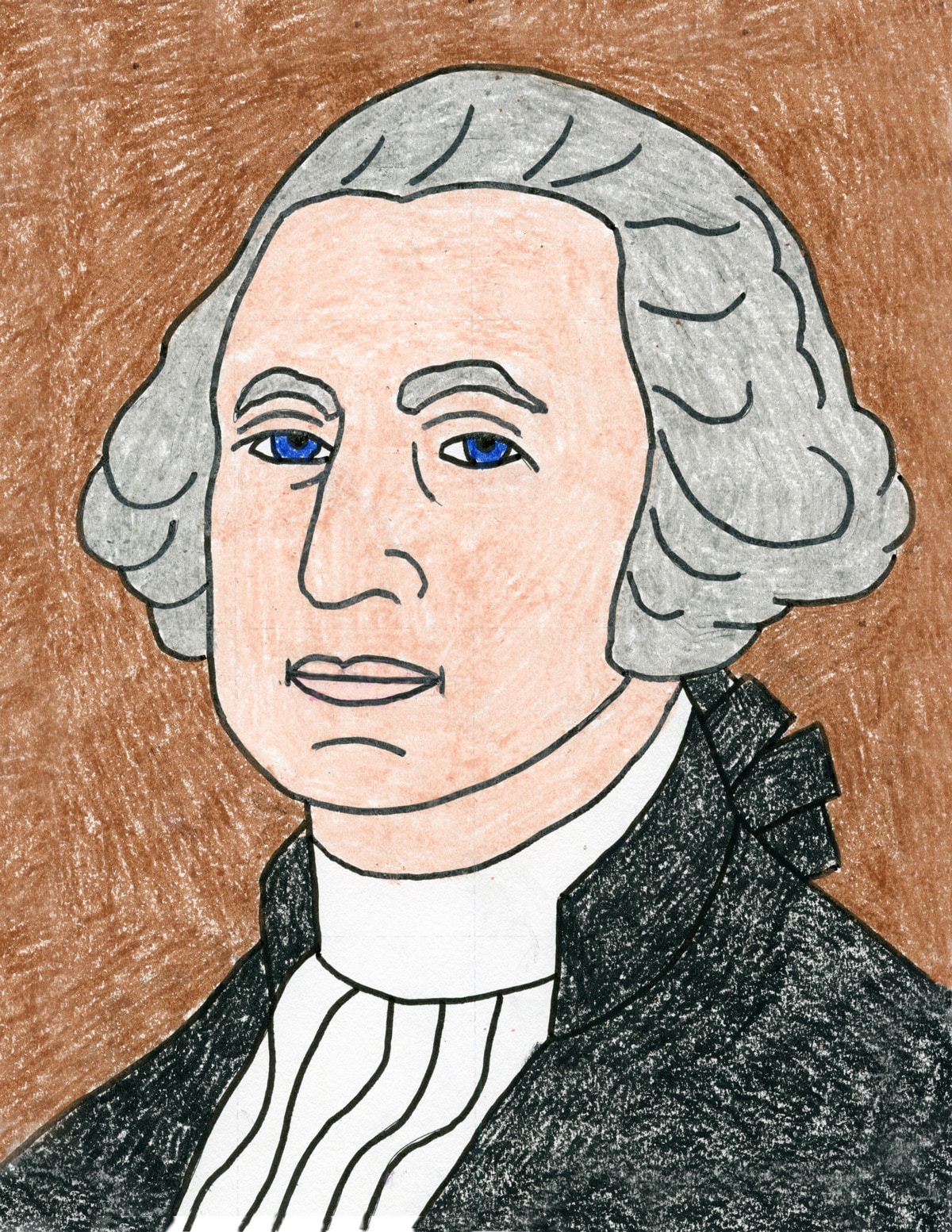
The shapes in this type of portrait art are generally soft and rounded. The face relies on gentle curves rather than sharp angles, which helps when sketching the structure of the cheeks and chin. The hair, often shown as a lighter color in paintings, provides a good opportunity to practice rendering texture. Whether the reference shows a powdered wig or natural hair, the lines usually suggest volume and fluffiness rather than stiff blocks. This contrast between the smooth skin and the textured hair is a key feature of the presidential portrait style.


Using a reference based on classical art teaches a lot about proportion. Because the original artists were precise about the placement of the eyes and nose, a simplified drawing keeps those relationships clear. This makes it easier for someone to check their own work as they go. If the eyes seem too high or the nose too long, comparing the sketch to the reference helps spot the difference right away.

Sketching a Young George Washington
While most images show the older president, a young george washington drawing offers a different challenge. References depicting his earlier years often show a different facial structure, perhaps with a stronger jawline or less defined wrinkles around the eyes. This type of historical figure reference is useful for those wanting to explore the man before he became the icon. The lack of heavy lines around the mouth and forehead requires a lighter touch with the pencil.


A drawing of a younger subject often involves fewer deep shadows on the face. The skin appears smoother, meaning that shading needs to be very subtle to look right. This is good practice for handling a pencil lightly and avoiding harsh scribbles. It suits hobby artists who want to try capturing a likeness without getting bogged down in heavy detail. A pencil sketch of this kind focuses on the overall shape of the head and the clear gaze of the eyes.
For beginners, a young washington outline might actually be simpler to copy. With fewer deep-set lines to replicate, the main task is getting the oval of the face and the features placed correctly. It works well as a starting point for understanding facial anatomy. The lack of heavy aging details allows the artist to focus on the basics of structure before moving on to more complex textures.
Following a Drawing Video for Guidance
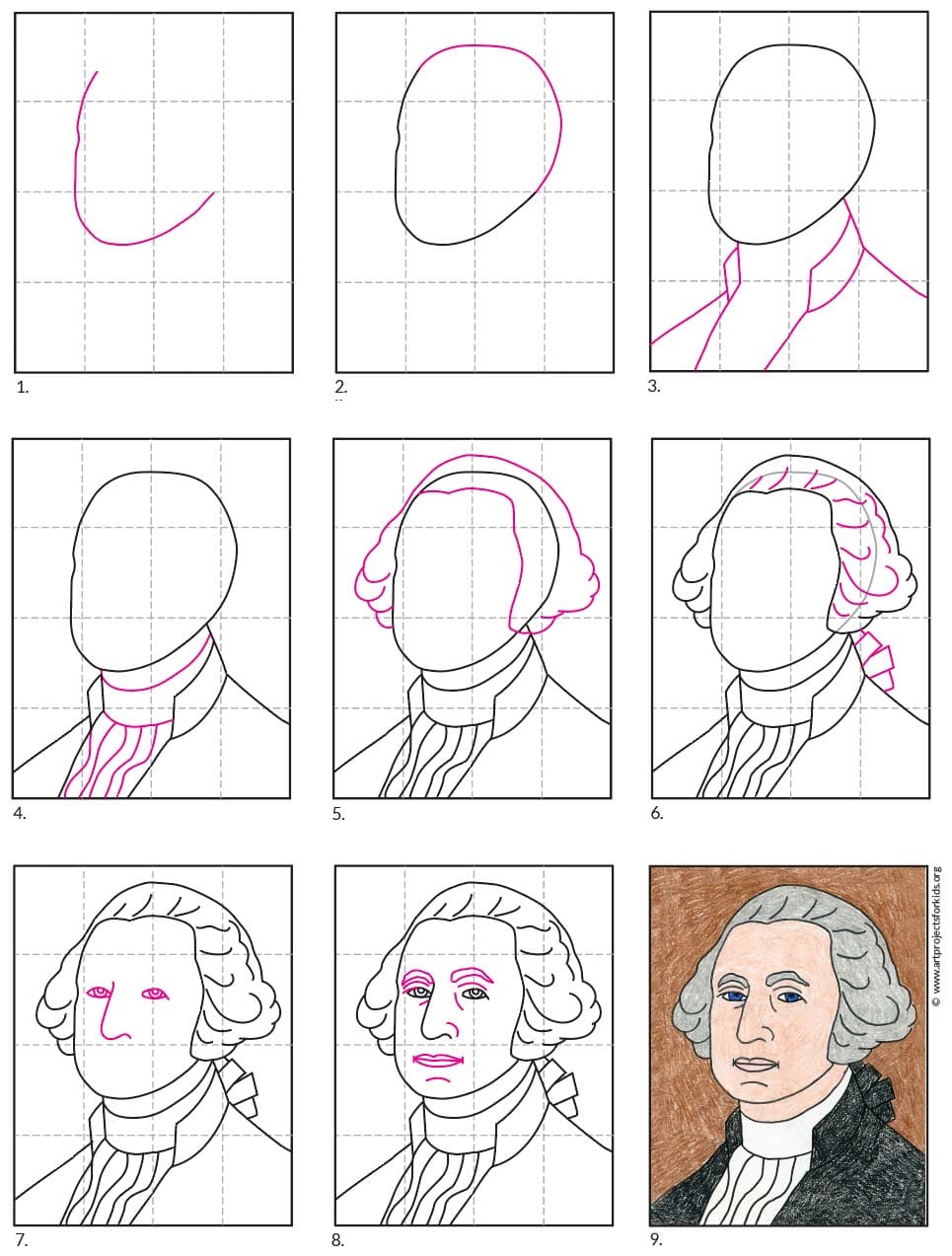
Sometimes a static image is not enough to understand how the lines come together. A george washington drawing video can bridge the gap by showing the order of strokes. Watching the process helps clarify where to start, often with the overall shape of the head, and how to build up to smaller details like the eyes and mouth. This approach is helpful for visual learners who prefer to see the hand movements involved in creating the drawing.

Using a video alongside a printable reference allows for a layered learning approach. One can watch the method, pause to look at the still image, and then apply the technique to their own paper. It is a practical way to learn about mapping out the face. Seeing someone else place the guidelines for the eyes and nose makes it easier to place those same lines on a fresh sheet. This method suits art students or anyone wanting to improve their portrait skills.

The motion seen in a video also demonstrates how to correct mistakes. It shows that lines are often searched for rather than placed perfectly on the first try. This encourages a flexible mindset. Instead of worrying about a perfect line immediately, the focus shifts to building the drawing gradually. It turns the process into a sketching warm-up rather than a high-pressure task.


Fun with Caricature and Meme Drawings
Not every reference needs to be serious. A george washington drawing meme style reference takes the recognizable features and plays with them. This might mean exaggerating the nose or the chin, or perhaps simplifying the hair into a cartoonish cloud. These kinds of drawings are great for a relaxed afternoon activity. They lower the pressure to be perfect and focus on the fun of creating something recognizable.

A simplified or cartoon version is often the best choice for younger artists. A george washington drawing easy enough for small hands usually involves basic shapes like circles and ovals. These outlines are perfect for tracing or for copying as a first attempt at portraiture. The bold lines are forgiving and easy to follow. It makes the process of drawing a founding father accessible and enjoyable without requiring advanced motor skills.

Even for experienced artists, messing around with a meme or caricature style can be a good exercise. It forces the artist to decide which features are the most important for recognition. Is it the wig? The jaw? The stern look? Stripping away the realistic details to find the essence of the character is a valuable skill. It is a creative exercise that sits somewhere between a doodle and a portrait.
Exploring Stylized and Japanese Art Interpretations
Art styles vary widely, and a george washington drawing can take on many different looks. A george washington japanese drawing style, for instance, might use the clean lines and distinct features found in manga or ink wash painting. This approach treats the subject in a fresh way, moving away from the strict realism of Western history books. It is an interesting way to combine American history with different artistic traditions.

Trying a different style requires looking at the reference in a new light. Instead of shading with a pencil, one might use bold ink lines or flat color blocks. A george washington drawing colored in this way becomes a graphic art project. It suits those who want to experiment with markers or digital tools. The focus shifts from realistic shading to line weight and composition.

This type of reference is also useful for understanding how culture influences art. Seeing the first president drawn in a style typically associated with other parts of the world highlights how art changes a subject. It opens up a conversation about how we see historical figures. It also provides a unique template for a coloring project, allowing for creative choices with skin tones, hair, and background elements.

Taking the time to study those historical references really makes a difference in the final result. It’s a great way to practice attention to detail, similar to the focus needed for What Are Tape Diagrams With Fractions?, where breaking things down simply is the key to success.
Give the drawing a try and see how it turns out. There is no right or wrong way to interpret a classic portrait, so just have fun with the process and enjoy the practice.


