This drawing tim burton printable is a handy reference for anyone looking to capture that unique, spooky-cute style on paper. It works perfectly as a guide for sketching characters or just as a fun coloring activity for a rainy afternoon. If you are looking for more creative inspiration, you might like Where Can I Find a Drawing a Poem Reference?.
The guide breaks down the process into clear steps, making it much easier to get those signature exaggerated proportions just right. It is a simple, practical resource for beginners or hobby artists who want to try their hand at character design.
Capturing Pairs in a Gothic Art Style
When exploring the concept of a drawing tim burton style couple, the focus shifts to how two distinct characters interact within the same frame. These references often showcase two figures with complementary features, perhaps one tall and spindly and the other short and round, highlighting the contrast central to dark whimsy. A reference sheet for a pair will typically emphasize comparative proportions, showing how to balance a large head against stick-thin limbs. This type of guide is excellent for understanding character relationships, as it demonstrates how to maintain a unified aesthetic while keeping each figure distinct. Hobby artists often use these paired references to practice spacing and composition, ensuring that both characters look like they belong in the same stop-motion world without crowding the page.


Sketching Edward Scissorhands Features
References focusing on specific iconic characters allow for a deeper study of the spooky character design elements that define the director's filmography. A practice page centered on a character like Edward Scissorhands usually highlights specific challenges, such as rendering complex textures like leather or metal alongside soft human features. These drawings often focus on the silhouette—the jagged edges of scissor-hands against a simple outline—making them a strong exercise in contrast. For those interested in tim burton edward scissorhands drawing practice, the key is often in the eyes; they are typically large, watery, and expressive, conveying emotion despite a otherwise stiff exterior. Art students might use these close-up studies to master the blending of mechanical and organic shapes, a staple of the genre.


Designing a Quirky Clown Character
A reference sheet featuring a clown offers a fantastic opportunity to play with exaggerated facial expressions and Burtonesque portraits. Unlike standard circus clowns, these versions often feature sunken eyes, exaggerated smiles that stretch a bit too wide, and a generally gaunt appearance. The shapes involved are usually a mix of triangular and rounded forms, creating a visual tension that feels both playful and slightly unsettling. This subject suits tim burton drawing kids activities well, as the basic shapes—circles for the nose and eyes, triangles for the hat—are easy for beginners to block out before adding the signature dark shading. It serves as a perfect introduction to character design where the goal is to evoke a specific mood rather than strict realism.


To get the most out of a character reference like this, a simple approach works best.


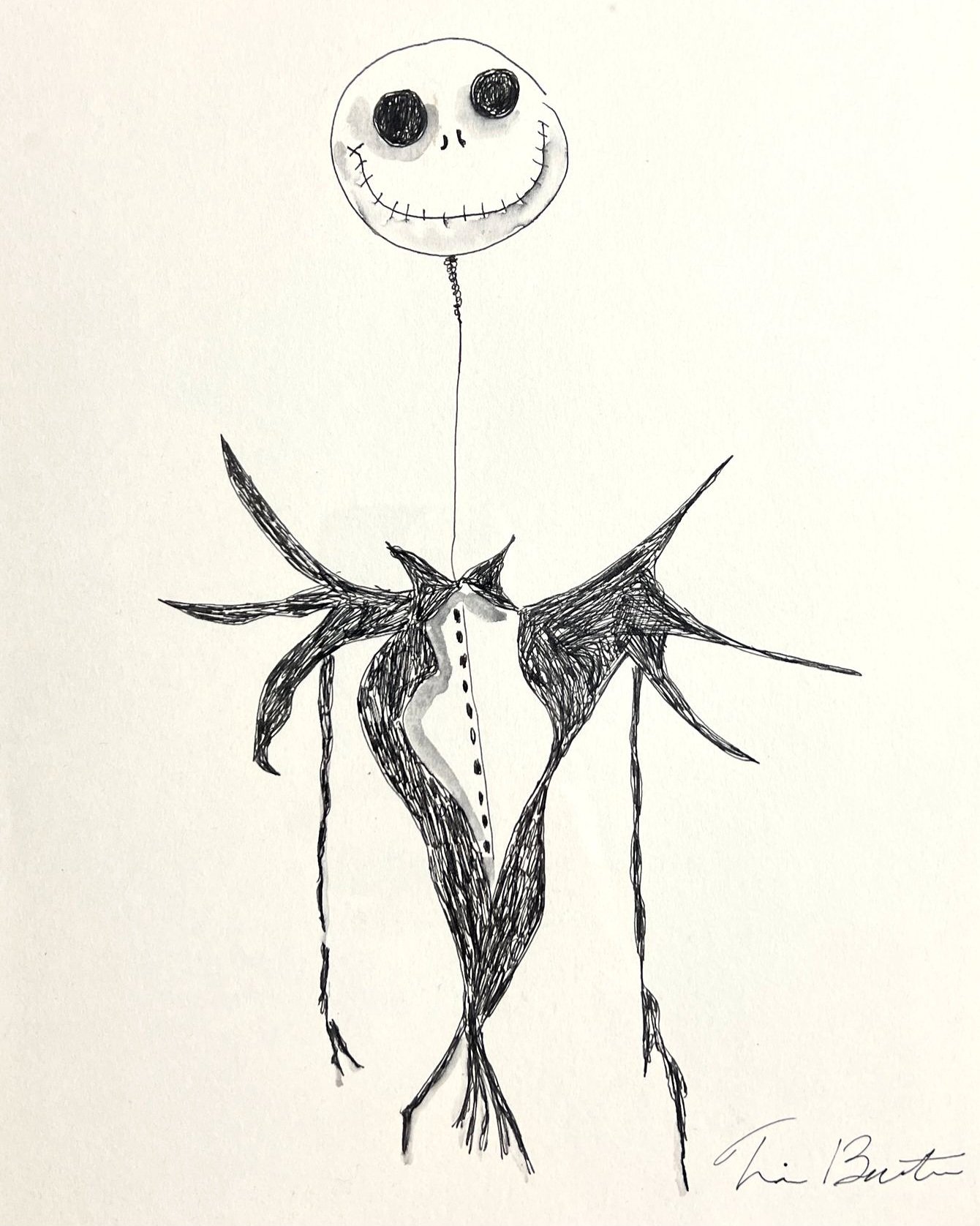

- Start by lightly sketching the largest shapes, such as the head and torso, using a hard pencil grade like an H or 2H to keep lines erasable.
- Add the defining features—eyes, nose, and mouth—checking their placement against the reference to ensure the expression reads clearly.
- Refine the outlines and add texture, such as cross-hatching for shadows, to give the drawing that signature gloomy depth.
- Finish by gently erasing the initial guide lines to clean up the character for coloring or display.
Drawing Cute but Spooky Bunnies
Animal subjects in this art style are a favorite among fans of the stop motion aesthetic. A rabbit reference, for instance, transforms a typically cute animal into something slightly otherworldly, often by enlarging the eyes and shrinking the muzzle. These drawings rely heavily on thin, sketchy lines to create a sense of texture and movement, mimicking the look of armatured puppets. When working on a bunny or similar creature, the focus is often on the fur texture, which is usually rendered with quick, jagged strokes rather than smooth shading. This makes for a relaxing sketching warm-up, as it encourages a loose hand and requires less precision than a human portrait. It is a practical way to practice bringing a sense of life and narrative to a single animal figure, much like organizing ideas with a How to Use a Venn Diagram Graphic Organizer helps bring structure to thoughts.


Setting the Scene with Backgrounds
While character focus is common, a reference that includes background elements teaches how to build a complete atmosphere. Tim burton art facts often point to the use of spirals and stripes to create visual movement in the setting, whether it is a swirling hillside or a twisted tree. A background reference guide will often demonstrate how to use perspective to make buildings look like they are looming or melting, adding to the uneasy vibe. These elements are important for anyone wanting to place their characters in a context, moving beyond standalone quirky sketches to full scene composition. Using a reference for backgrounds helps artists understand how to balance detailed foreground elements with simpler, moody backdrops, ensuring the focus remains on the interaction between the character and their environment.


A good way to start is to pick the easiest sheet on the list and focus on getting those proportions right before moving on to the details. It is always a smart idea to print a few extra copies to have on hand, much like keeping a reference for 18 Parts on This Labeled Diagram of a Plant Cell nearby for science studies. Save the page that catches your eye and give it a try today.